
Jordan Patterson · 13 September 2026
Digital Footprint Mapping in Solo-Run Online Ventures Beyond Standard Practices
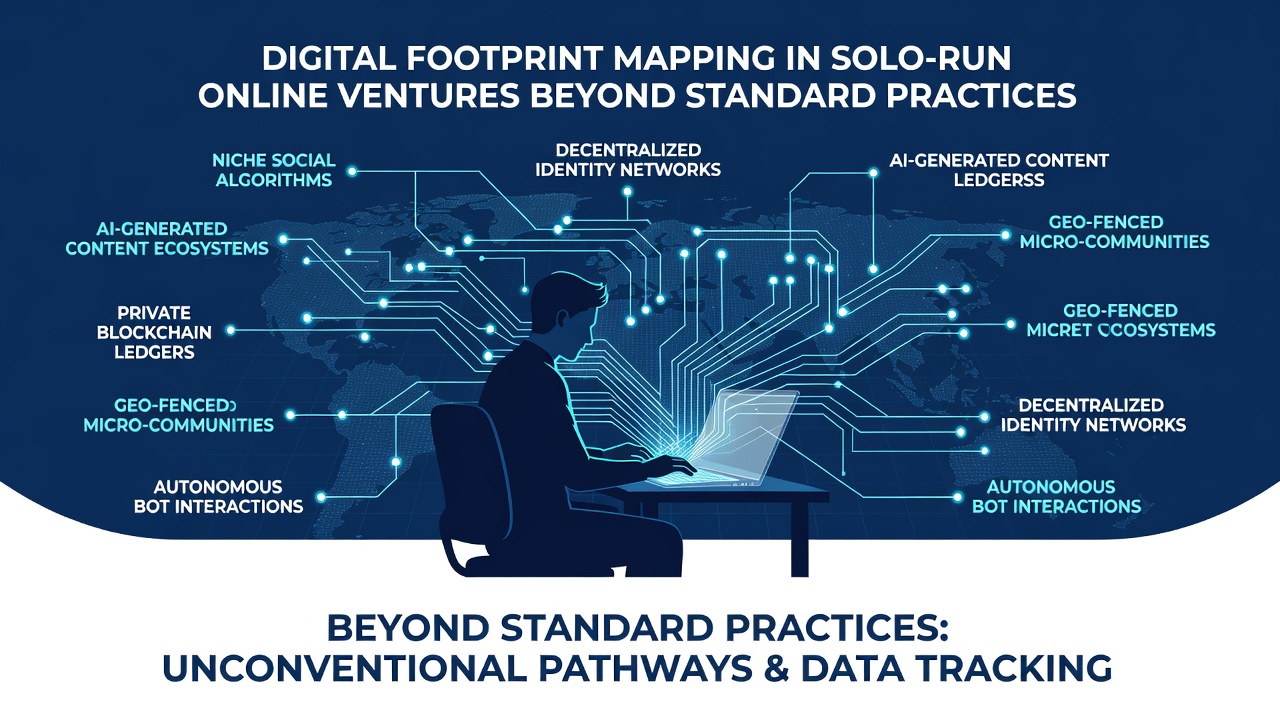
Digital footprint mapping tracks every trace an online venture leaves across websites, platforms, and data networks, and solo operators often extend this process well past basic analytics dashboards. Researchers at various universities have documented how independent site owners compile data from server logs, third-party cookies, social media APIs, and search engine results to build detailed profiles of their digital presence, while standard practices typically stop at page views and referral sources. Beyond those basics, mapping incorporates device fingerprinting, behavioral signals from email open rates, and cross-platform user interactions that reveal patterns in traffic quality and audience retention over time.
Core Components of Extended Mapping Techniques
People running single-person operations frequently integrate multiple data streams into unified maps that show connections between content performance and external mentions, and this approach draws from sources like web archives alongside real-time monitoring services. Data shows that combining DNS records with social sharing metrics allows operators to identify which platforms drive sustained engagement rather than one-time visits, while figures from industry reports indicate that such layered analysis helps pinpoint vulnerabilities in privacy controls or unauthorized data scraping. In September 2026 several regulatory updates across multiple jurisdictions will require clearer disclosure of these tracking methods, prompting solo ventures to refine their mapping protocols to maintain compliance without disrupting daily workflows.
Data Sources adn Aggregation Methods
Experts have observed that effective mapping relies on both public and proprietary inputs, including government open data portals from agencies in Canada and Australia that publish statistics on digital commerce trends. Solo operators pull information from these repositories to benchmark their own activity against broader market movements, and they layer it with academic studies on user behavior from institutions in the European Union. One study revealed that aggregation tools capable of handling API calls from multiple networks reduce the time needed to generate comprehensive reports, whereas manual collection often leads to incomplete pictures of an online venture's reach. Those who've studied this process note that cross-referencing search console data with email marketing platforms creates a clearer view of how content travels beyond the primary domain.
Advanced techniques involve monitoring competitor backlinks and mention graphs, and these elements extend mapping into competitive intelligence territory. Research indicates that solo-run sites using graph-based visualizations can spot emerging referral patterns months before they appear in standard traffic reports, while tools that scrape public forum discussions add context to quantitative numbers. Observers note that such methods require careful handling of data ethics, since pulling information from public sources still demands attention to terms of service across different platforms.
Privacy and Regulatory Considerations
Regulatory bodies such as the Federal Trade Commission in the United States and equivalent organizations in other regions emphasize transparency in data collection practices, and solo operators must align their mapping activities with these guidelines to avoid potential issues. Evidence suggests that ventures which document their footprint mapping processes in detail find it easier to respond to data subject requests, while incomplete records create complications during audits. Academic papers from various research centers highlight how small operations benefit from automated logging systems that tag each data point with its source and collection date, reducing the risk of overlooking older entries that might still influence current strategies.
Industry organizations focused on digital commerce have published frameworks that outline steps for expanding beyond default analytics, and these resources encourage the inclusion of qualitative signals like sentiment analysis from public comments. Data from multiple regions shows that operators who adopt these extended methods often achieve more stable traffic quality over extended periods, because they can adjust outreach based on a fuller picture of audience origins and behaviors.
Implementation in Daily Operations
Those managing independent sites frequently schedule regular mapping reviews, and this habit integrates with content planning cycles to ensure new material aligns with observed patterns. Tools that export data into customizable dashboards allow quick identification of shifts in search rankings or social mentions, while integration with CRM systems adds depth by linking visitor behavior to follow-up communications. Researchers discovered that consistent application of these practices correlates with improved retention metrics across tested cohorts of solo ventures, although results vary depending on niche and audience demographics.
Conclusion
Digital footprint mapping beyond standard practices equips solo-run online ventures with structured insights drawn from diverse sources and methods, and ongoing developments in regulation and technology continue to shape how these maps are constructed and maintained. Operators who incorporate layered data collection and visualization approaches gain clearer visibility into their digital presence, supporting informed decisions about growth and compliance.